Overall, there is much more choice ability when students bring their lunches from home rather than buying school lunch. This can lead to various other benefits I’ve discussed like less student satisfaction, less food waste, healthier options, and education. The opposite can be said to be true when bringing a lunch, but giving students and families a greater CHOICE gives them the ability to prevent this if they choose to.
Student Satisfaction:
- “To avoid monotony, the lunch box menu should be varied from day to day. And remember that the right combination of colors, flavors and textures is important in every meal, both at home and one abroad”(Buccholtz 6).
- It depends if parents give students a say in what gets put in their lunch from home or not, but usually they get to choose food they are more willing to eat. This leads to students being happier with their lunch meals.
- “The idea is not only to pack a wholesome, nutritious lunch but one that will be enjoyed—ond therefore will be eaten to the last crumb.” (Buchholtz 5)
- “The only lunch-line choices were yes and no.” (Laird 18)
- In school lunch lines there is a limit on the types of food available, so it is hard to satisfy picky eaters.
Food Waste:
- Students are less likely to waste food if they get to choose what is in their lunch.
- Laird explains that choice matters when it comes to food waste because students are given limited options in lunch lines, and sometimes are even forced to put certain foods on their plate (27).
- This explains the higher waste rates of vegetables, that school systems are forced to put on students plates to promote healthy eating, are being thrown away (Smith, Cunningham 1260).
- However, parents can still purposely add healthy items to their children’s lunch boxes, which their kids don’t like. This can lead to them throwing away these food items to make it look like they ate them and make their parents happy.
Healthier options:
- Laird explains that while a school community “boasted fertile family farms, organic gardens, food coops, creative cooks, and international ethnicities galore,” their most popular school lunch item called a “pizza bagel, neither Kosher nor vegetarian, always topped with a very few hamburger crumbles or a slice of pepperoni on top of the cheese.” (18) This may not be the case everywhere, but is for many school systems.
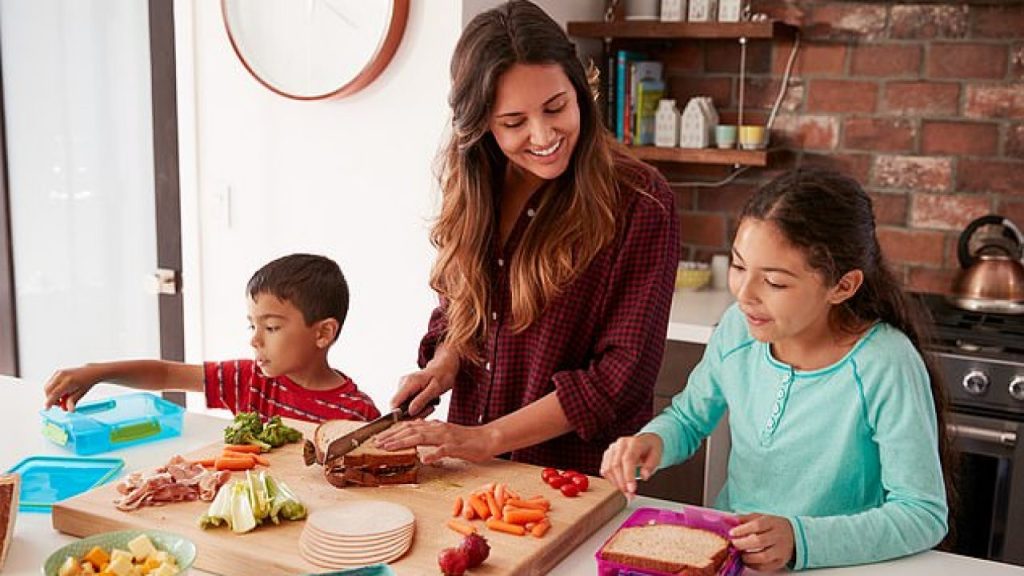
- When packing a lunch from home, students can have a greater variety of options to choose from and, if they eat healthy at home, they can continue this at school.
- On the other hand, if students come from households that are full of junk food, or are more impoverished, they may have less healthy options. This will then carry over to their lunch at school and have a negative effect.
- “Girls and boys are building the physical houses in which they are to live. If, like some carpenters, they select a poor grade of material, or all one type of material, they will not have strong, useful buildings” (Park 6)
Education
- Giving students the choice to pick their items, not only allows them to eat healthier, but teaches them to continue making smart choices for their health.
- Laird says, “In that deliberation lies its educational value, of course, for choosing involves reflection upon values; it requires knowledge of options and substantial information about them; it requires developing self-knowledge and cultural sensitivity” (25-26).
 Packed School Lunch in America