Food is one of the biggest components of one’s health, and is even more important for children because they are still developing. That is why school lunch plays a huge part in student’s health and bringing lunch can have different effects from buying lunch.
Comparison:
- Au’s Study Results
- showed that students who ate breakfast and lunch from school consumed diets higher in dairy-rich foods while limiting calories from solid fats and added sugars, compared with students eating meals from home (1823).
- eating school meals was not associated with differences in intakes of vegetables and whole grains compared with eating meals from home (1823).
- on average, all students achieved about half of the maximum diet quality score, which shows the need for improvement for all students, regardless of where their meals come from (1823)
- Farris’s Study Results
- “Nearly two thirds of the packed lunches contained at least one dessert item, and approximately one fifth of those lunches contained two dessert items, which contributed to increased levels of energy, fat, saturated fat, and sugar, compared to lunches that did not contain dessert” (279).
- Rougly 42% of packed lunches did not contain a fruit or vegetable (278).
- Only 12.5% of lunches packed both a fruit and vegetable (278).
- Rougly 59% of packed lunches did not contain a sugar sweetened beverage (278).
- However, students or families that choose not to eat school made lunch on nutritional grounds- not money or convenience – are much healthier than those who do for those purposes (Poppendieck 142).
- If the packer of lunch’s goal is to make it healthy, than it will be. On the other hand if they pack lunch to save money, it may not be as healthy because generally healthier foods are more expensive. Also, if their goal is just convenience they may not take the time to plan something healthy and just throw pre-packaged food in the lunch, instead of things like fresh foot at vegetables.
- This shows that packing school lunch is what one makes of it, but in general tends to be less healthy than school provided lunches due to school policies,
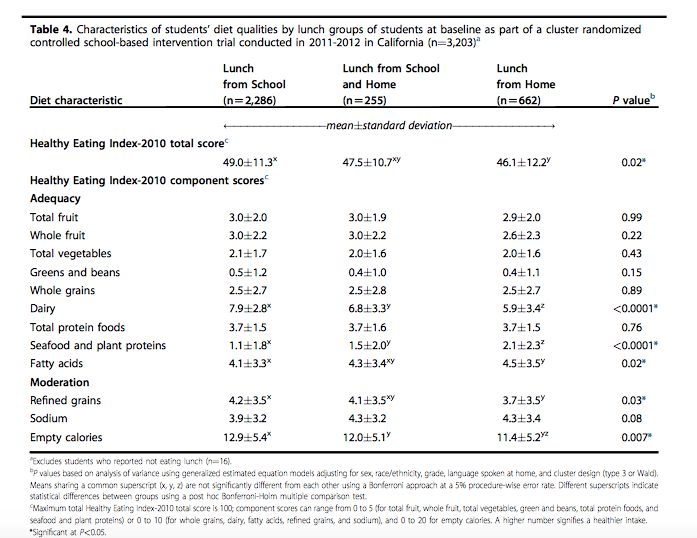
Au’s Study chart
School Policy:
- “National School Lunch Program (NSLP) was established in 1946—ever since then, the primary source of daily nutrition for countless US children living in poverty” (Laird 20).
- The NSLP gets to choose what standards are set for school lunches, which aids them in requiring different food groups to add to health, but can increase food waste.
- However if school policies change and start to set regulation on lunches from home, they “may be another option that may help improve the nutritional quality of packed lunches for elementary children” (Farris 279).
Importance of Health and Long term Effects:
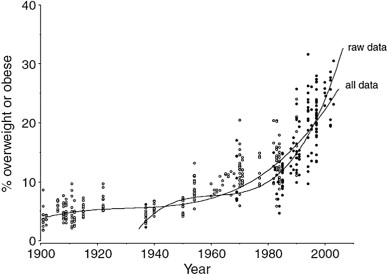
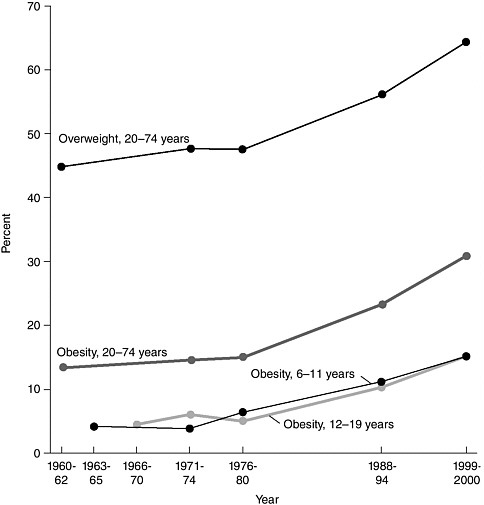
- “Increases in childhood obesity rates may be partially attributed to decreases in the nutritional quality of diets “(Farris 275)
- This increase in average weight of Americans can be shown overtime, historically. This correlates to school lunch health because it is one of the biggest, or biggest meals of the day for students.Also, making healthy food choices when one is young makes it easier to do throughout one’s life.
- Malnutrition, goes further than just weight and physical issues, as Laird says it can also damage children’s brains and affect their behavior and intelligence (24).
Safety/ Sanitization:
- Another aspect of whether food is healthy is if it is safely prepared. Many things can go wrong in the kitchen that lead to food poisoning, like not cooking meat properly. However, bringing a packed lunch adds safety problems because food can spoil from the time it is packed to when it is eaten, hours later.
- Also, Park explains that lunch boxes should be sanitized daily in order for them to be clean and safe to keep food in (10).
- Park says, “The cold lunch which a child has to carry to school should be planned with more, instead of less, care than the other two meals of the day, as there are a limited number of foods which are appetizing after having been packed for four hours ”(7). She explains how if food is not kept properly it can go bad and not be appetizing, or healthy to eat.
- The importance of sanitation has changed a lot in the past century due to things like technology improvement, like the increase of domestic refrigerators and freezers. Although these were available since the 1930s, suburbanization in the 1950s caused a skyrocket of these being available in the home. That made it easier to shop for food to pack in lunches and then store it safely (Bjornlund 78).
How the definition of healthy food has changed:
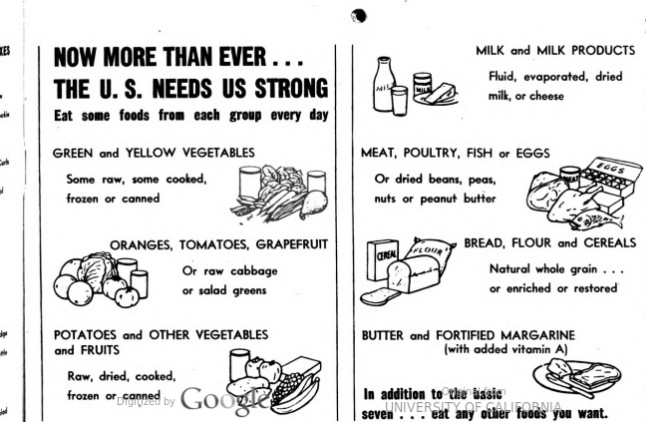
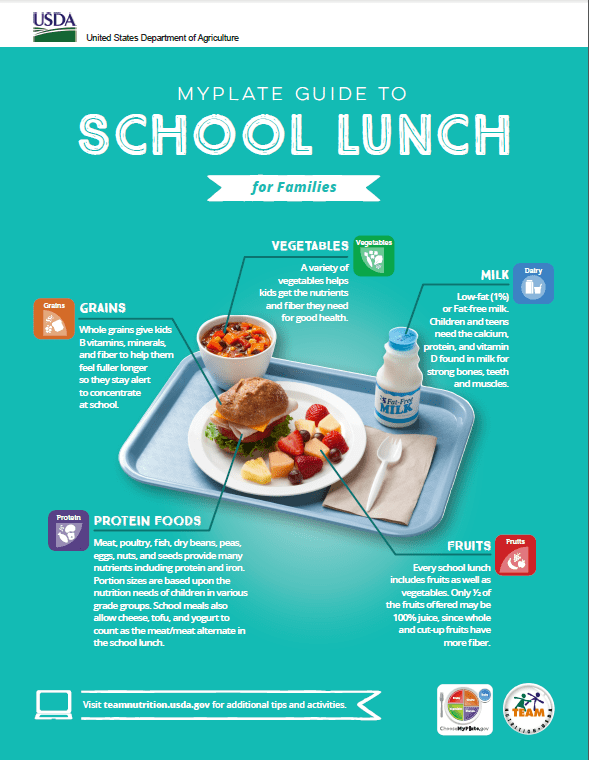
- Throughout history, what people consider healthy has changed with more research and improvements in technology. In Park’s book there were3 food groups, that she urged lunch packers to include, and in Buchholtz’s there were 7. Now there are various understandings of what is healthy and not much of a scientific consensus. However, the NLSP has 5 groups for school provided lunches.
- Part of why definitions of what is healthy has changed in because of the rise industry marketing to build consumer want. Now, the dairy industry will emphasize the importance of dairy in a diet to sell their products.
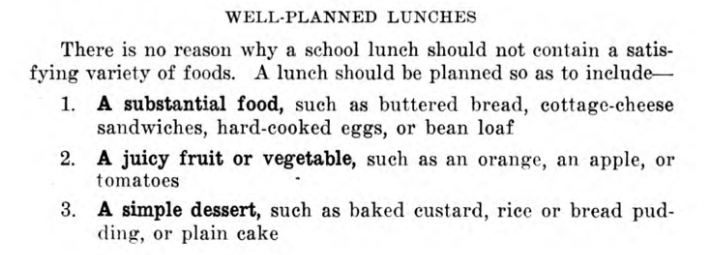
1920s
1940s
NSLP Groups
 Packed School Lunch in America