Gender roles come into play for both who prepares children’s school lunches as well for who is eating them. It is usually women who prepare school lunches, which is a trend that has not changed since the rise of bagged lunches over a century ago. Also, there are certain stereotypes in what type of food should be given for girls for lunch verus for boys.
Who’s making the lunch:
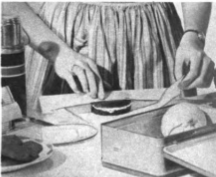
- In the past (1940s), much responsibility was put on mothers to make their children, and husbands acceptable lunches to bring to work and school.
- “Planning and packing good lunches day after day should be looked upon as something of a challenge. If you don’t meet it with initiative and enthusiasm, the members of your family will be eating hastily-put-together and unsatisfactory meals instead of the wholesome lunches they need for good health and morale” (Buchholtz 4).
- Buchholtz explains how it was their duty and if did not succeed at planning and preparing good, nutritious lunches their whole family would suffer (4).
- Park, who wrote in the 1920s, explains the negatives of this burden being placed on women. She writes “Many mothers have not had an opportunity to study food values. They are anxious to give their children the very best, but lack of knowledge along this line makes it diflicult” (6). Park emphasizes that regardless, women should have the time and knowledge to pack a simple lunch that isn’t monotonous or unappetizing (11).
- It is interesting that although women’s rights have increased and gender stereotypes have decreased, that women are still usually the ones packing bagged lunches. Also, since more women are in the workforce this can be more difficult for them to do because it is another thing to take up their time. This can lead to lazily packed lunches, or even an increase in buying school lunch because it is more convenient.
Who’s eating the lunch:
- There are various preconceived notions of the types and amount of food women versus men should eat and this can start with children at a young age.
- Although it is true that grown men should be consuming more calories than women, this wouldn’t be the case for younger students, but because of the stereotype, mothers have packed more for their sons than daughters.
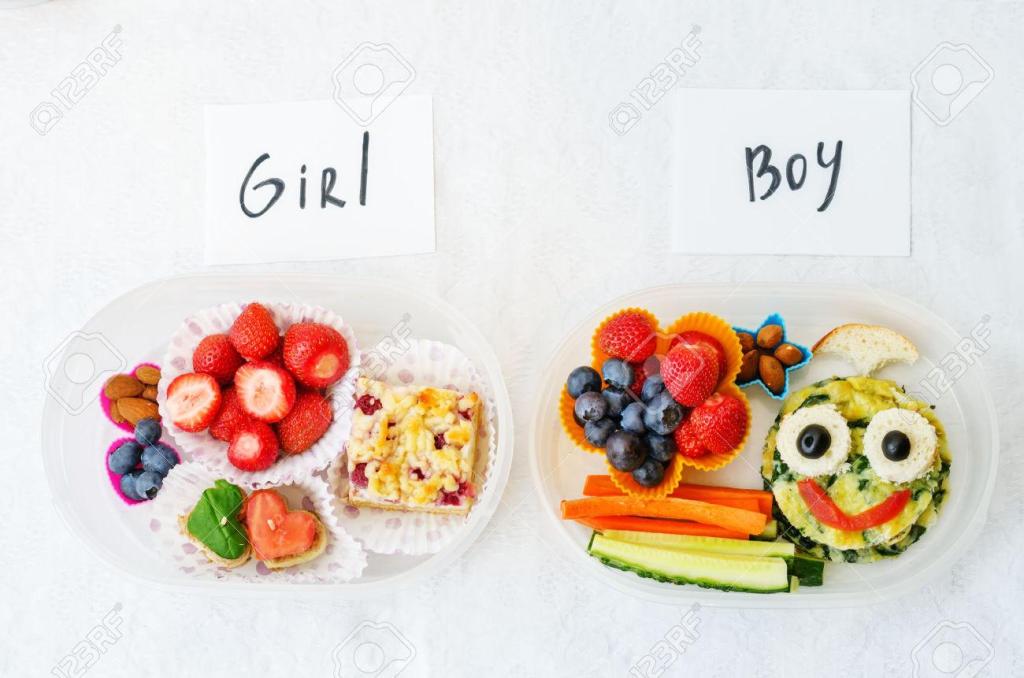
- Furthermore, the types of food that girls versus boys “should” eat, differ.
- “Teen-age girls and women office workers like dointier foods and are interested more in variety than are boys and men —whose preferences run to substantial food, and plenty of it” (Buchholtz 5). Buchholtz encourages mothers reading to pack lunces according to these ideas (5).
- While this is not as common today, girls sometimes still get shortchanged on the food their mothers pack them for school.
- However, this also correlates to food waste and what gender contributes most to it.
 Packed School Lunch in America